Key Features & Benefits
- High-yielding and early-bearing improved variety of moringa.
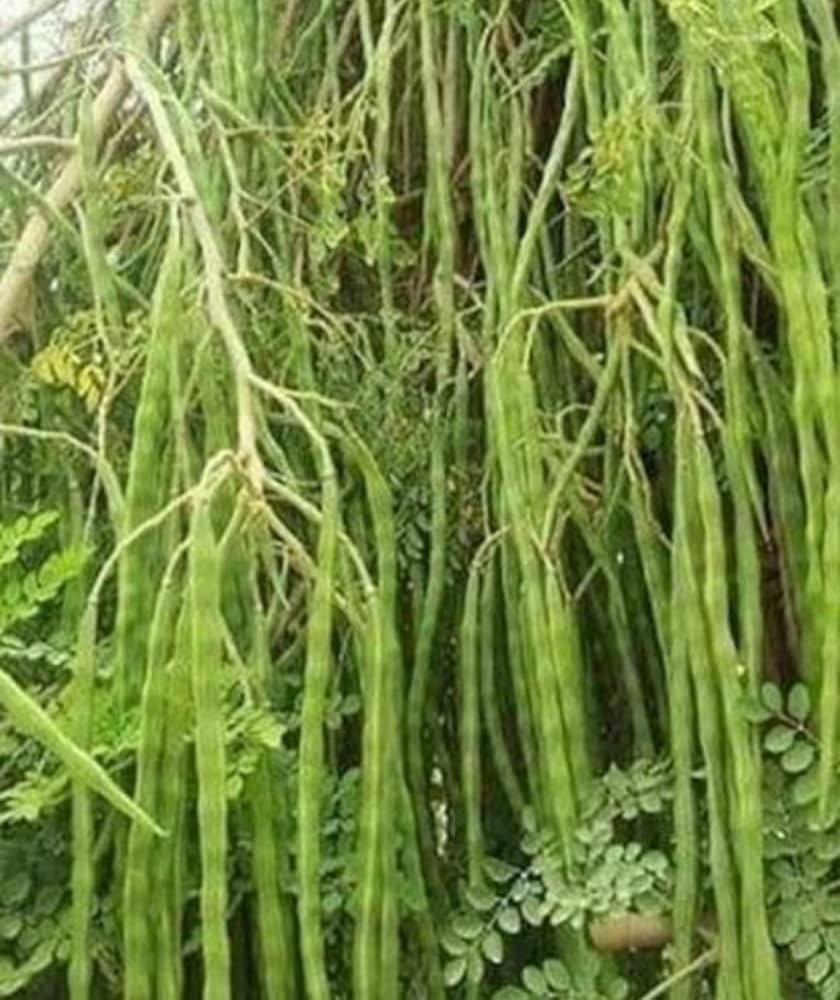
- Produces long, tender, and fleshy pods with excellent taste.
- Rich in nutrients such as vitamins A, C, calcium, iron, and protein.
- Fast-growing plant suitable for home gardens and commercial cultivation.
- Leaves, pods, and flowers are edible and highly beneficial for health.
- Well adapted to tropical and semi-arid regions.
Plant Care Guide
- Sunlight: Requires full sunlight (6–8 hours daily) for best growth and yield.
- Soil: Well-draining sandy or loamy soil; tolerates slightly alkaline soil (pH 6.5–8).
- Temperature: Ideal temperature range is 25°C–35°C.
- Spacing: Maintain 8–10 feet spacing between plants in open ground.
Watering
- Water regularly during early growth to establish roots.
- Once established, water 1–2 times per week.
- Highly drought-tolerant but performs better with moderate watering.
- Avoid waterlogging, as roots are sensitive to excess moisture.
Fertilizers
- Apply organic manure or compost at planting time.
- Add compost or vermicompost every 2–3 months.
- Use balanced NPK fertilizer (10-10-10) occasionally for higher productivity.
- Avoid excessive nitrogen to ensure better flowering and pod formation.
Re-potting Instructions
- Suitable for container growing when young; requires deep pots (18–24 inches).
- Re-pot only when necessary due to deep taproot system.
- Carefully transfer plant to avoid root disturbance.
- Use well-draining soil mix and ensure proper drainage holes.
- Best transplanted at an early stage.
Fruiting Season
- Begins flowering within 4–6 months after planting.
- Starts producing pods within 6–8 months.
- Can yield multiple harvests per year in warm climates.
- Peak production usually during summer and monsoon seasons.
Usage Ideas
- Pods used in curries, sambhar, soups, and stir-fries.
- Leaves used in dals, vegetable dishes, and as a health supplement powder.
- Flowers used in traditional recipes and herbal preparations.
- Seeds used for oil extraction and water purification purposes.
- Widely used in nutritional and medicinal applications.
Care Tips
- Prune regularly to control height and encourage branching.
- Provide support for young plants in windy areas.
- Maintain good drainage to prevent root rot.
- Remove dry or diseased branches for healthy growth.
- Monitor pests like caterpillars and aphids; treat with neem oil.
- Harvest pods when tender for best taste and quality.


Reviews
Clear filtersThere are no reviews yet.