Key Features & Benefits
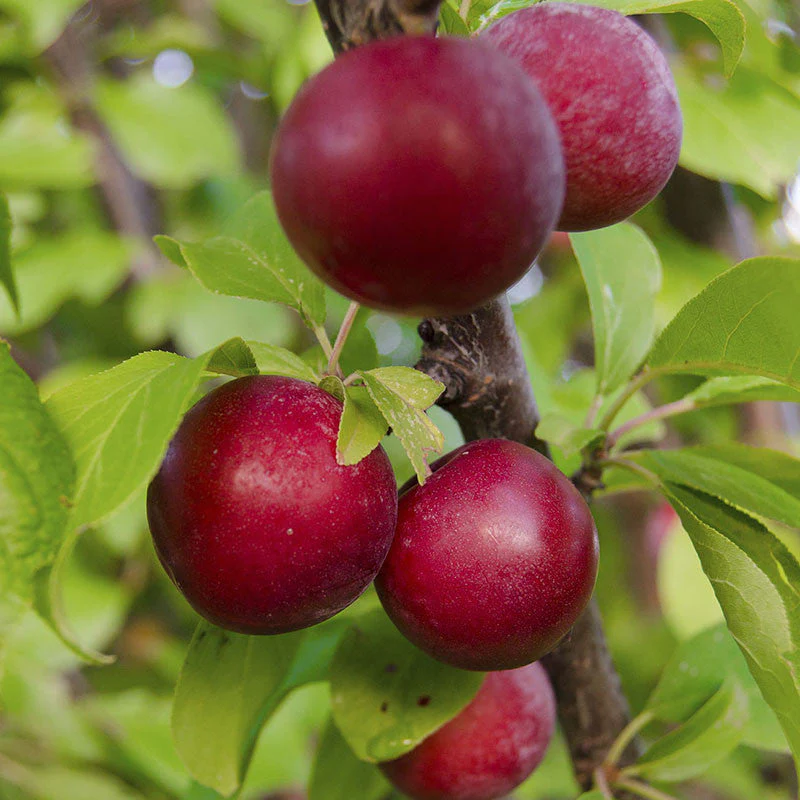
- A popular variety of Plum Tree known for attractive red-skinned fruits
- Produces sweet to mildly tangy, juicy fruits
- Rich in vitamins (A, C, K), fiber, and antioxidants
- Deciduous tree with seasonal growth cycle
- Suitable for home gardens and orchard cultivation
- Good market demand due to taste and nutritional value
Plant Care Guide
Sunlight
- Requires full sunlight (6–8 hours daily)
- Essential for flowering and fruit sweetness
Climate Note
- Performs best in regions with mild winters (needs some chilling for fruiting)
- In warm regions, choose low-chill varieties for better results
Soil
- Prefers well-drained sandy loam soil
- Rich in organic matter for healthy growth
- Ideal pH range: 5.5 to 6.5
- Avoid heavy waterlogged soils
Watering
- Water regularly during growing season
- Keep soil evenly moist but not soggy
- Increase watering during flowering and fruit development
- Reduce watering during dormancy (winter)
- Avoid overwatering to prevent root issues
Fertilizers
- Apply organic compost or well-rotted manure every 1–2 months
- Use balanced NPK fertilizer (10:10:10) during growth phase
- Add phosphorus and potassium to improve flowering and fruit quality
- Micronutrients like boron and zinc support better yield
Re-potting Instructions
- Suitable for container growing in early stages
- Use pots of at least 16–20 inches depth
- Re-pot every 1–2 years
- Replace topsoil annually with fresh compost mix
- Eventually transplant to open ground for best results
Fruiting Season
- Starts fruiting in 3–5 years (depending on variety and care)
- Flowering usually occurs in late winter to early spring
- Fruits mature in summer (April to June in many regions of India)
Usage Ideas
- Eat fresh as a fruit
- Use in jams, jellies, and preserves
- Make juices, smoothies, and desserts
- Used in baking such as pies and cakes
- Can be dried to make prunes (in specific varieties)
Care Tips
- Prune annually during dormancy to maintain shape and improve yield
- Ensure good air circulation to prevent fungal diseases
- Protect from pests like aphids, fruit borers, and caterpillars
- Use neem oil or appropriate sprays for pest control
- Mulching helps retain soil moisture and regulate temperature
- Choose low-chill varieties if growing in warmer climates.


Reviews
Clear filtersThere are no reviews yet.