Key Features & Benefits
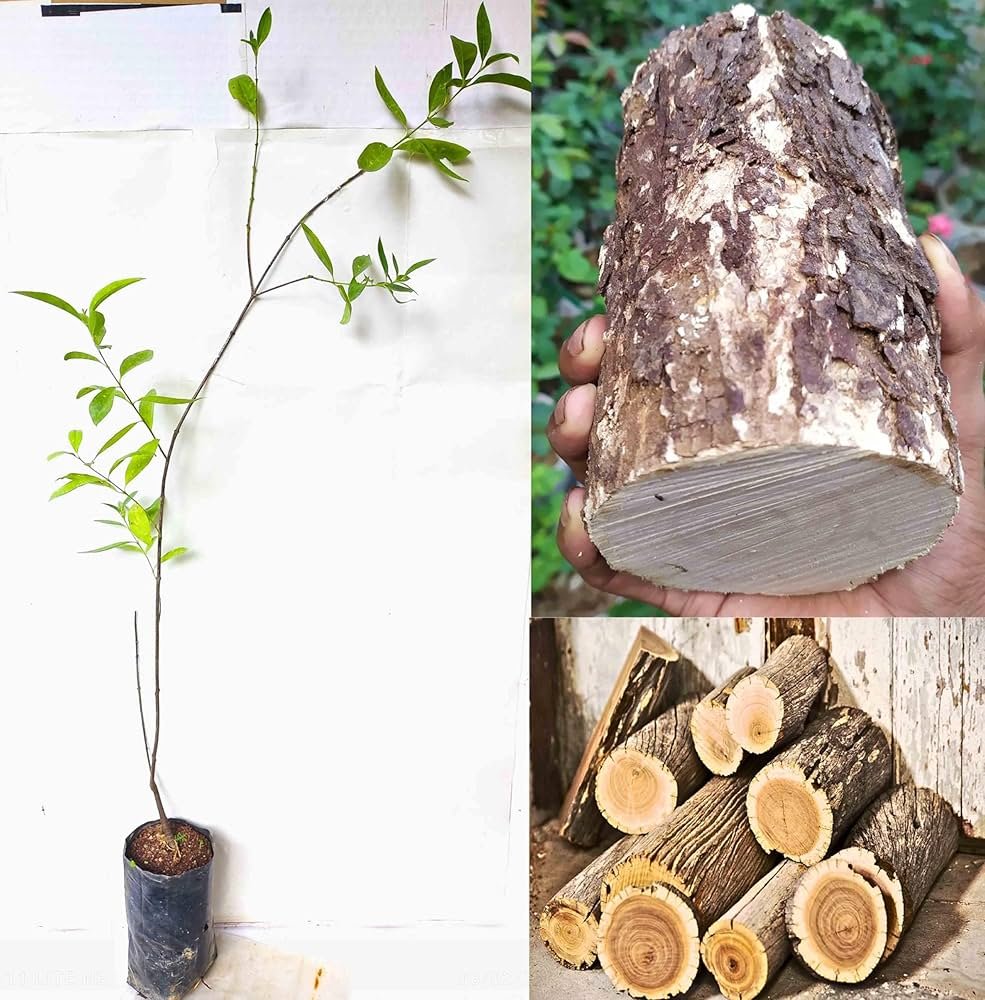
- Highly valuable aromatic tree known for its fragrant heartwood
- Produces sandalwood oil used in perfumes, cosmetics, and medicines
- Evergreen plant with small green leaves and smooth bark
- Long lifespan tree with high commercial and medicinal value
- Wood and oil have antibacterial, anti-inflammatory, and calming properties
- Used in religious rituals, incense, and traditional practices
- Suitable for long-term investment and agroforestry
Important Note
- Sandalwood is a semi-root parasitic plant (needs a host plant to grow well)
- Requires nearby host plants to absorb nutrients
Plant Care Guide
Sunlight
- Requires full sunlight
- Minimum 6–8 hours of direct sunlight daily
Soil
- Well-draining sandy or loamy soil
- Tolerates poor soils but prefers slightly alkaline to neutral pH
- Avoid heavy clay and waterlogged soil
Temperature
- Thrives in warm climates
- Ideal temperature: 12°C to 35°C
- Can tolerate drought once established
Watering
- Water regularly during early growth stage
- Once established, requires less water
- Avoid overwatering
- Ensure soil dries slightly between watering
Fertilizers
- Generally low fertilizer requirement
- Apply organic compost occasionally (every 1–2 months in early stage)
- Avoid heavy chemical fertilizers
- Growth mainly depends on host plant support
Re-potting Instructions
- Re-pot only when young (within first 1–2 years)
- Use deep pots to support root growth
- Ensure a host plant is present in the same pot
- Handle roots carefully as they are sensitive
- Best time: early monsoon
Host Plants (Very Important)
- Needs compatible host plants such as:
- Pigeon pea (Arhar)
- Neem
- Curry leaf plant
- Acacia species
- Host plant should be planted nearby or in the same container
Flowering & Fruiting Season
- Starts flowering after 3–4 years
- Small purple-brown flowers appear in clusters
- Fruiting follows flowering, producing small seeds
- Valuable heartwood develops after 8–10+ years
Usage Ideas
- Long-term commercial plantation
- Used in perfume, incense, and essential oil production
- धार्मिक and spiritual uses
- Wood carving and handicrafts
- Ayurvedic and skincare applications
Care Tips
- Always grow with a suitable host plant
- Protect from waterlogging
- Minimal pruning required
- Monitor for pests and diseases
- Avoid root disturbance
- Good spacing is important for plantation
- Be patient—valuable wood forms over many years
Other Names of White Sandalwood Plant
- Chandan
- Safed Chandan
- Indian Sandalwood
- East Indian Sandalwood
- Srigandha
- Santalum album.


Reviews
Clear filtersThere are no reviews yet.